
The practice of yoga is often perceived by the uninitiated as a series of fluid stretches or static contortions designed primarily for flexibility. However, at its most profound level, yoga is a sophisticated system of neurological re-patterning. Two of the most critical components of this internal work are proprioception and isometrics. While they are often discussed in the realms of physical therapy and athletic performance, their intersection within a yoga practice creates a powerful synergy that fosters joint stability, muscular strength, and a heightened sense of bodily presence. By understanding how the mind perceives the body in space and how static muscle engagement reinforces that perception, practitioners can transform their movement from a purely physical exercise into a meditative science of embodiment.
Defining the Internal Map: Proprioception
Proprioception is frequently referred to as the sixth sense. It is the body’s ability to perceive its own position, motion, and equilibrium without relying on visual cues. This is made possible through a complex network of sensory receptors located within the muscles, tendons, and joints, known as proprioceptors. These include the Golgi tendon organs, which monitor muscle tension, and muscle spindles, which track changes in muscle length.
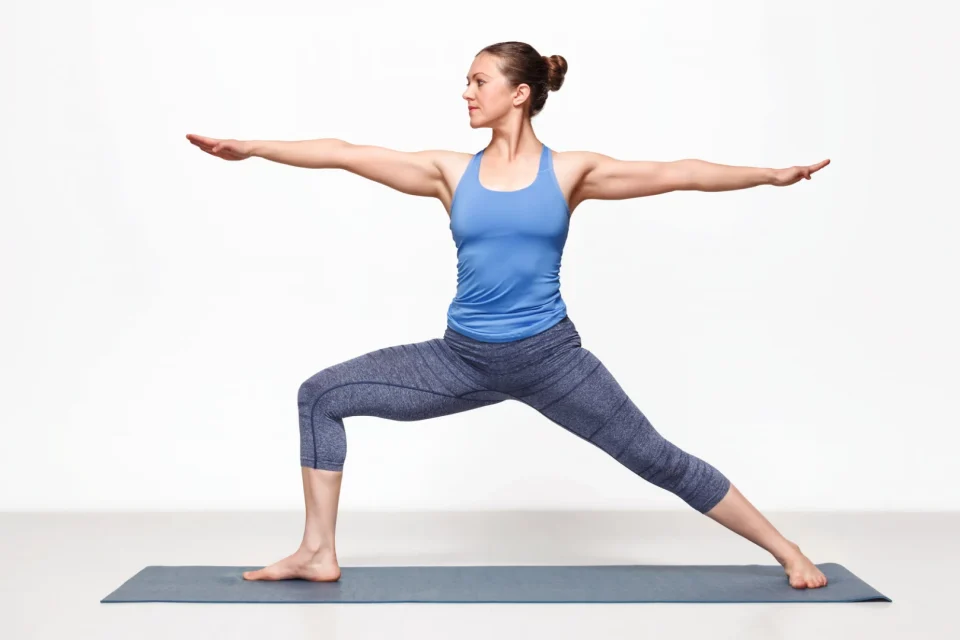
In a yoga context, proprioception is what allows an individual to know if their back foot is aligned in Warrior II without turning their head to look at it. It is the internal feedback loop that tells the brain exactly where the limbs are in relation to the torso and the ground. For many beginners, this internal map is “blurry.” Through the consistent practice of asana, this map becomes increasingly high-definition. This refinement is crucial not only for the grace of the movement but for the prevention of injury, as it allows the practitioner to make micro-adjustments in real-time to protect vulnerable joints.
The Role of Isometrics in Static Postures
While proprioception provides the map, isometrics provide the stability. An isometric contraction occurs when a muscle produces force without changing its length and without any visible movement in the joint. In yoga, almost every “held” pose is an exercise in isometrics. Unlike isotonic movements, such as a bicep curl where the muscle shortens and lengthens, isometrics involve a high level of tension held in a static position.
Isometrics are particularly effective in yoga for building strength at specific joint angles. When a practitioner holds a pose like Plank or Chair Pose, they are utilizing isometric contractions to resist the pull of gravity. This type of engagement is exceptionally safe for the joints because it eliminates the shearing forces often associated with high-impact or rapid-repetition exercises. Furthermore, isometrics have a unique effect on the nervous system; they require a high degree of motor unit recruitment, essentially “waking up” muscle fibers that might remain dormant during more passive movements.
The Neurological Synergy of Mind and Muscle
When proprioception and isometrics intersect, the result is a state often described in yoga as “steadiness and ease.” This intersection is where the true work of the practice resides. When a muscle is engaged isometrically, it sends a surge of information to the brain via the proprioceptors. Because the muscle is under tension but not moving, the brain receives a very clear, stable signal about that body part’s location and state of being.
-
Refining the Sensory Feedback: Isometric holds allow the practitioner to “scan” their body. If you are holding a balance like Tree Pose, the isometric engagement of the standing leg provides a constant stream of data to the brain about the subtle shifts in the ankle. This allows the proprioceptive system to make lightning-fast corrections to maintain balance.
-
Building Functional Stability: By engaging muscles isometrically in various yoga shapes, we reinforce the joints in ranges of motion where they might otherwise be weak. This “stiffening” of the surrounding musculature protects the ligaments and allows for a deeper, safer exploration of flexibility.
-
Enhancing the Mind-Body Connection: The intense focus required to maintain an isometric contraction while simultaneously monitoring proprioceptive feedback creates a “flow state.” This occupies the conscious mind so fully that the chatter of the ego falls away, leading to the meditative benefits of the practice.
Practical Application: Isometric Engagement in Common Asanas
To truly experience the intersection of these two concepts, one must look beyond the external shape of a pose and focus on internal actions. These “hidden” movements are what separate a passive stretch from an active, therapeutic posture.
Warrior II and the Power of Opposition
In Warrior II, the arms are held parallel to the floor. While they appear static, a practitioner can apply isometrics by imagining they are trying to pull their hands away from each other while simultaneously hugging the arm bones into the shoulder sockets. At the same time, the legs can engage in a “scissoring” action, pulling the heels toward the midline without actually moving the feet. This isometric engagement immediately heightens proprioception, making the practitioner feel more “plugged in” to their center and more aware of their wingspan.
Plank Pose and Protracting the Scapulae
In a high plank, many people sag into their shoulder joints. By applying an isometric push—acting as if they are trying to push the floor away—the serratus anterior and pectorals engage. This protraction of the shoulder blades provides the brain with a clear sense of the upper back’s position. This heightened proprioceptive awareness prevents the “collapsing” that leads to wrist and shoulder strain.
Downward Facing Dog: The External Rotation
One of the most common cues in Downward Facing Dog is to “wrap the triceps toward the floor.” This is an isometric action of the rotator cuff. While the hands are fixed on the mat, this intentional muscular engagement creates a stable “socket” for the humerus. The proprioceptive feedback from this action tells the practitioner exactly where their shoulders are in relation to their ears, helping to create space in the neck.
Overcoming Sensory-Motor Amnesia
Many modern individuals suffer from what is known as sensory-motor amnesia—a condition where the brain has essentially “forgotten” how to access or feel certain muscle groups due to prolonged sitting or repetitive stress. The combination of isometrics and proprioception in yoga acts as a remedial education for the nervous system.
By holding a pose and intentionally contracting a neglected muscle—such as the gluteus medius in a standing balance—the practitioner re-establishes the neural pathway between the brain and that muscle. This is not just about strength; it is about “re-inhabiting” parts of the body that have gone numb. Over time, this results in better posture, more efficient movement patterns in daily life, and a profound sense of being “at home” in one’s own skin.
The Breath as the Bridge
In this intersection of isometrics and proprioception, the breath serves as the vital link. Isometric holds can often lead to a tendency to hold the breath, which triggers a stress response in the nervous system. However, in yoga, the goal is to maintain high muscular tension (isometrics) and high sensory awareness (proprioception) while keeping the breath smooth and diaphragmatic. This teaches the nervous system how to remain calm under pressure—a skill that translates directly from the yoga mat to the stresses of the modern world.
Conclusion: The Path to Mastery
The intersection of proprioception and isometrics represents the “internal alignment” of yoga. While external alignment focuses on where the feet and hands are placed, internal alignment focuses on the quality of engagement and the clarity of the mind’s connection to the body. By prioritizing these neurological elements, a practitioner moves beyond the superficial aspects of yoga. They develop a body that is not just flexible, but intelligent; a mind that is not just quiet, but present; and a practice that serves as a powerful tool for lifelong health and self-discovery.
Frequently Asked Questions
How does isometric training in yoga differ from lifting weights?
In weightlifting, the primary focus is often on the concentric and eccentric phases of a movement to build muscle mass. In yoga, the isometric focus is on maintaining a specific shape against gravity or opposing muscular forces. This emphasizes “functional” strength and endurance within the joints’ natural ranges of motion, rather than just increasing the size of the muscle.
Can proprioception be improved, or is it a fixed trait?
Proprioception is highly trainable. Much like a musical instrument or a new language, the more you challenge your sensory-motor system—through balancing, closed-eye exercises, or complex yoga transitions—the more the neural pathways strengthen and the more accurate your internal map becomes.
Why do my muscles shake during isometric holds in yoga?
This shaking is often referred to as “therapeutic tremors.” It occurs when motor units in the muscle begin to fatigue and the nervous system struggles to keep them firing in a smooth, synchronized manner. It is a sign that you are challenging your current neurological threshold and that adaptation is occurring.
Are isometric exercises safe for people with high blood pressure?
Isometric exercises can cause a temporary spike in blood pressure if the practitioner holds their breath (the Valsalva maneuver). However, when performed with steady, rhythmic breathing as taught in yoga, they are generally considered safe. Anyone with cardiovascular concerns should consult a physician and focus on maintaining a consistent breath throughout the hold.
Does focusing on proprioception help with anxiety?
Yes. Proprioception requires “interoception”—the ability to feel the internal state of the body. By anchoring the mind in the physical sensations of muscular engagement and joint positioning, the practitioner pulls their focus away from ruminative thoughts and into the present moment, which has a naturally grounding and calming effect on the nervous system.
How long should I hold an isometric contraction in a yoga pose?
For beginners, 15 to 30 seconds is often enough to stimulate neural adaptation. More advanced practitioners may hold poses for 1 to 3 minutes. The key is to maintain the quality of the contraction and the integrity of the breath; once form breaks or the breath becomes jagged, the neurological benefit diminishes.
Can I practice isometrics if I am hypermobile?
Actually, isometrics are essential for hypermobile individuals. Because hypermobile people have “lax” connective tissue, they often rely too much on their joints and not enough on their muscles. Isometric engagement provides the necessary stability to protect their joints from over-extending and helps them develop the strength to control their large range of motion.
image_generation: A professional, high-quality photograph of a focused yoga practitioner in a challenging balance, such as Warrior III or a handstand, captured from a side profile. The lighting should emphasize the muscular definition and the subtle “engagement” of the body. The background should be a serene, minimalist studio environment with natural light. The image should convey a sense of intense focus, stability, and “quiet power” rather than just a stretch. 800px width.
