
The pursuit of youthful skin has transitioned from superficial topical treatments to highly sophisticated molecular biology. Among the most significant breakthroughs in dermatological science is the integration of peptides with liposomal delivery systems. While peptides have long been recognized for their ability to signal cellular repair, their effectiveness was historically limited by the skin’s natural defense mechanisms. The emergence of liposomes as a vehicle for these powerful molecules has revolutionized anti-aging serums, allowing active ingredients to bypass the stratum corneum and reach the deeper layers of the dermis where structural rejuvenation occurs.
Understanding the Biological Role of Peptides
Peptides are short chains of amino acids that serve as the fundamental building blocks of proteins such as collagen, elastin, and keratin. In the context of skin aging, these molecules act as biological messengers. When collagen naturally breaks down due to age or environmental stressors like ultraviolet radiation, it produces specific peptide fragments. These fragments signal to the skin cells, specifically fibroblasts, that it is time to synthesize new collagen.
By applying synthetic peptides through anti-aging serums, we essentially trick the skin into believing it has undergone a breakdown of structural proteins, thereby stimulating a proactive repair response. There are several categories of peptides used in modern formulations, each serving a distinct purpose:
-
Signal Peptides: These are the most common in anti-aging products. They stimulate fibroblasts to produce more collagen, elastin, and other structural proteins, leading to firmer and thicker skin.
-
Neurotransmitter Inhibiting Peptides: Often referred to as “topical botox,” these molecules, such as Acetyl Hexapeptide-8, interfere with the signals that cause facial muscles to contract, thereby softening expression lines and wrinkles.
-
Carrier Peptides: These deliver trace elements like copper or magnesium to the skin, which are necessary for enzymatic processes involved in wound healing and collagen synthesis.
-
Enzyme Inhibitor Peptides: These work by interfering with the enzymes that break down collagen, such as matrix metalloproteinases, effectively preserving the skin’s existing structural integrity.
The Challenge of Skin Permeability
Despite their potential, peptides face a significant hurdle: the skin is designed to keep things out. The stratum corneum, the outermost layer of the epidermis, consists of dead skin cells embedded in a lipid-rich matrix. This barrier is highly effective at preventing the entry of large or hydrophilic (water-loving) molecules.
Because peptides are relatively large and often water-soluble, they struggle to penetrate this fatty barrier on their own. Without a sophisticated delivery system, a standard peptide serum might sit on the surface of the skin, providing hydration but failing to initiate the deep-tissue cellular signaling required for true anti-aging results. This is where the science of liposomes becomes indispensable.
The Mechanics of Liposomal Delivery
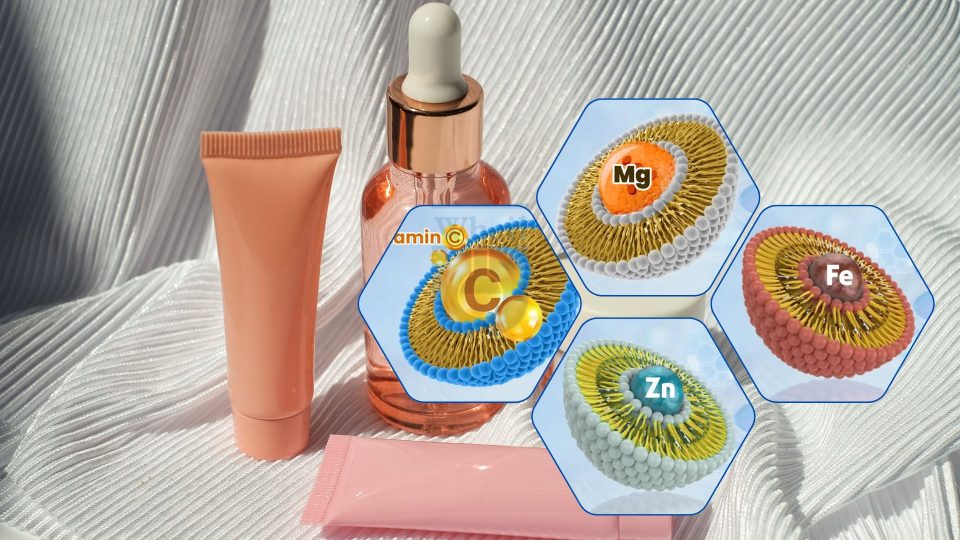
Liposomes are microscopic, spherical vesicles composed of a lipid bilayer, identical in structure to human cell membranes. These vesicles can encapsulate active ingredients—in this case, peptides—protecting them from degradation and facilitating their transport through the skin’s layers.
The genius of the liposome lies in its amphiphilic nature. The outer shell is fat-soluble, allowing it to merge seamlessly with the lipids in the stratum corneum. As the liposome moves through the skin, it acts as a protective “shuttle,” preventing the peptides from being broken down by enzymes on the skin’s surface. Once the liposome reaches the target depth, it slowly releases the encapsulated peptides.
This delivery method offers several advantages over traditional serums:
-
Enhanced Penetration: Liposomes can reach the deeper epidermis and even the dermis, where fibroblasts reside.
-
Time-Released Action: Liposomal systems provide a sustained release of peptides over several hours, ensuring the skin cells receive a steady signal for repair rather than a single, overwhelming burst.
-
Increased Stability: Peptides can be sensitive to light, air, and pH changes. Encapsulation keeps them stable and potent until they reach their destination.
-
Reduced Irritation: By delivering active ingredients directly to the target area, liposomes minimize the concentration of ingredients sitting on the surface, which can reduce the likelihood of contact dermatitis or sensitivity.
Synergistic Effects in Anti-Aging Formulations
The most effective anti-aging serums do not rely on a single peptide or a basic liposome. Instead, they utilize a cocktail of ingredients that work in synergy. For instance, combining signal peptides with antioxidants like Vitamin C within a liposomal matrix provides a dual-action approach. The peptides stimulate new collagen production, while the antioxidants protect that newly formed collagen from oxidative stress and free radical damage.
Furthermore, liposomal technology allows for the inclusion of hydrating factors like hyaluronic acid alongside peptides. Since liposomes are made of phospholipids, they also contribute to the restoration of the skin’s lipid barrier. This helps to lock in moisture and improve the overall texture of the skin, providing an immediate smoothing effect while the peptides work on the long-term structural changes.
Clinical Efficacy and Long-Term Benefits
The transition from traditional serums to peptide liposome technology has been backed by significant clinical observations. Users typically report a visible improvement in skin elasticity and a reduction in the depth of fine lines after consistent use over four to eight weeks. Because the process relies on the body’s natural regenerative cycles, the results are cumulative.
One of the most profound benefits of liposomal peptide serums is their impact on “inflammaging”—a term used to describe the chronic, low-grade inflammation that accelerates the aging process. By delivering calming peptides and stabilizing the skin barrier, liposomes help down-regulate inflammatory markers, leading to a more resilient and youthful complexion over time.
Future Horizons in Peptide Science
As biotechnology continues to advance, we are seeing the development of even more specialized delivery systems, such as niosomes and ethosomes, which are variations of the liposome designed for even deeper penetration or the delivery of highly unstable molecules. Additionally, the discovery of new “biomimetic” peptides—those that perfectly mimic the body’s natural signaling sequences—promises even greater precision in anti-aging treatments.
The convergence of nanotechnology and dermatology means that we are no longer just moisturizing the skin; we are essentially “programming” it to remain in a state of repair and renewal. Peptide liposomes represent the pinnacle of this movement, offering a scientifically sound method to reclaim the structural vitality of youthful skin.
Frequently Asked Questions
Can I use liposomal peptide serums with retinol or exfoliating acids?
Yes, but timing is important. While peptides are generally non-irritating, the liposomal delivery system makes them very efficient. Using them alongside strong acids or retinoids can sometimes increase the penetration of those harsher ingredients, leading to sensitivity. Many dermatologists recommend using peptide serums in the morning to protect and signal repair, and saving retinoids for the evening.
How do I know if a serum actually uses liposomal technology?
Look for terms such as “encapsulated,” “liposomal delivery,” or “phospholipids” on the ingredient list. High-quality formulations will often highlight this technology because it is a significant factor in the product’s price and efficacy. The texture of liposomal serums is often slightly milky or opaque rather than crystal clear.
Are there specific skin types that benefit most from peptide liposomes?
While all skin types can benefit, they are particularly effective for those with mature, thinning, or dry skin. Because the liposomes themselves are made of fats, they help replenish the lipid barrier, which is often compromised in aging or sensitive skin. Those with oily skin should look for lightweight, water-based liposomal serums to avoid a heavy feel.
Is there a risk of the body becoming resistant to peptide signaling?
No, the skin does not develop a “tolerance” to peptides in the way it might to certain medications. Peptides are mimicking natural signals that the body uses throughout life. Continuing to provide these signals helps maintain the rate of collagen production that naturally slows down as we age.
Do liposomal peptides have any effect on hyperpigmentation?
Some specific peptides are designed to inhibit the enzymes responsible for melanin production. When these are delivered via liposomes, they can be more effective at reaching the melanocytes in the basal layer of the epidermis. However, for significant pigment issues, they are usually used as a secondary treatment alongside brightening agents like niacinamide or kojic acid.
Are synthetic peptides as safe as natural ones?
Synthetic peptides are generally considered safer and more stable than those derived from animal or plant sources for topical use. Lab-created peptides are designed to be “biomimetic,” meaning they are identical to the sequences found in human skin, which reduces the risk of allergic reactions or purity issues often associated with natural extracts.
How should liposomal serums be stored to maintain their potency?
Even though liposomes protect the peptides, they are still sensitive to extreme heat and direct sunlight. It is best to store these serums in a cool, dark place. Some people choose to keep them in a skincare refrigerator, which can also provide a soothing, cooling effect upon application.
image_generation: A professional, high-resolution scientific visualization of a liposome vesicle in a skincare context. The image shows a microscopic, spherical lipid bilayer (liposome) with glowing peptide molecules encapsulated inside. The background is a soft, clinical blue and white, representing a sophisticated dermatological serum. The lighting should highlight the semi-transparent layers of the liposome, emphasizing the high-tech delivery system. 800px width.
